
Plant Profiles


Peruvian Apple (Kadushi)
Cereus repandus
This cactus fruit sets itself apart from all others with a columnar growth habit as smooth, spike-free varieties. Like a dragon fruit but on the sweeter side, they have the refreshing texture of a kiwi but without the acidity, with pleasantly crunchy little black seeds and a mild sweet flavor. —Photo from @neelylab8

Pitahaya (Dragon Fruit)
Hylocereous undatus
This incredible refreshing fruit is like biting into a giant kiwi without any of the acidity, but with the same juicy texture and pleasantly crunchy little black seeds. Flavor ranges from mildly sweet to sweeter, and fruits range from smooth to spiked. The growth form of the plants is a vining type epiphyte cactus that grows up trees.

Tunas (Prickly Pear)
Opuntia ficus-indica
Tunas are super sweet delicious fruits from specific fruiting varieties of nopales. The color that they are on the outside is indicative of the color of the flesh within, similar to pitayas in texture and flavor, and they have small but intense spikes that must be removed before peeling. —Photo from @amoxtli_andante


Xoconostle
Opuntia matudae
This variety of tuna (prickly pear) grows on a pad-shaped cactus and tends to be lighter in color with a light pink blush and a particularly sour flavor. Also, rather than its seeds being distributed throughout the fruit like regular prickly pear and dragon fruit, it has a centralized cavity more like a cantaloupe or a tomato. —Photo from @luisguillermo_vargas.studio

Pitaya Mexicana
Stenocereus thurberi
Pitayas grow on tall columnar cactuses, are smaller and sweeter than dragon fruit, and come in a wide variety of vibrant colors. The fruit is completely covered in spikes and must be harvested carefully with tongs. —Photo from Luces del Siglo


Thick-Skinned cucumbers
Cucumis sativus
Cucumbers with thicker skins hold their moisture in well, resulting in the crispest, crunchiest fruits with a stronger cucumber flavor than their thinner-skinned cousins.

Thin-Skinned Cucumbers
Cucumis sativus
Thin-skinned cucumbers tend to be very soft and supple with a mild cumber flavor and sleek, uniform shape, perfect for cutting into spears and eating with dip and for fresh cucumber salads.


Spicy Peppers
These peppers tend to be smaller in size with a much higher heat content that is to be approached with caution. With an average Scoville Heat rating of 5,000, Jalapeños are pretty mild as far as spicy peppers go, explore the full Pepper Index for twelve common spicy peppers enjoyed around the world, ranging up to 75,000 SHU.
Warm Peppers
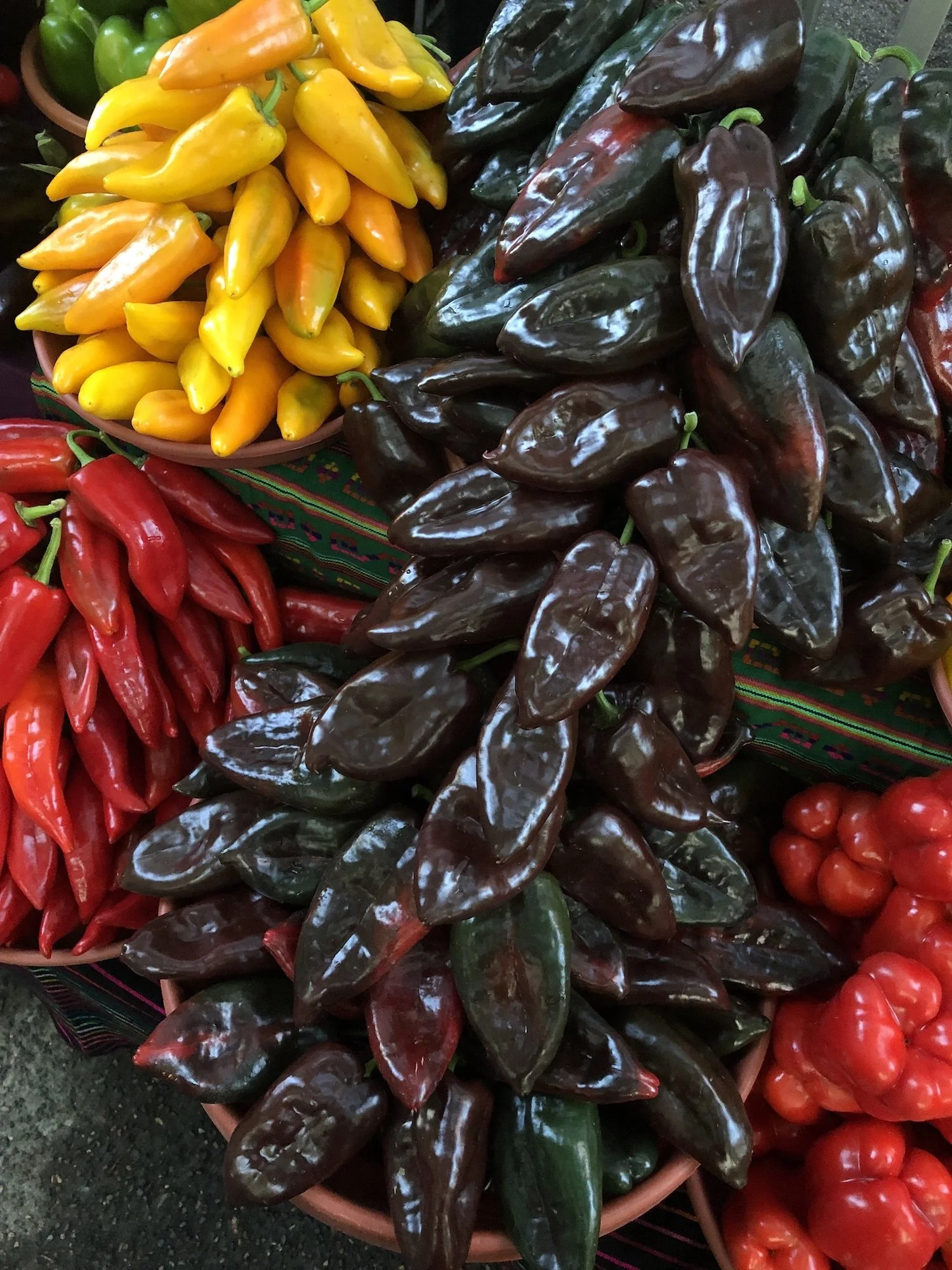
These peppers are all known to have a super rich, savory flavor with a mild to warm heat. Harvested and eaten both green while the peppers are still pretty mild in addition to when ripened to their full red or brown color and spice level. Explore the full Pepper Index to learn more about six common warm peppers.
Mini Peppers
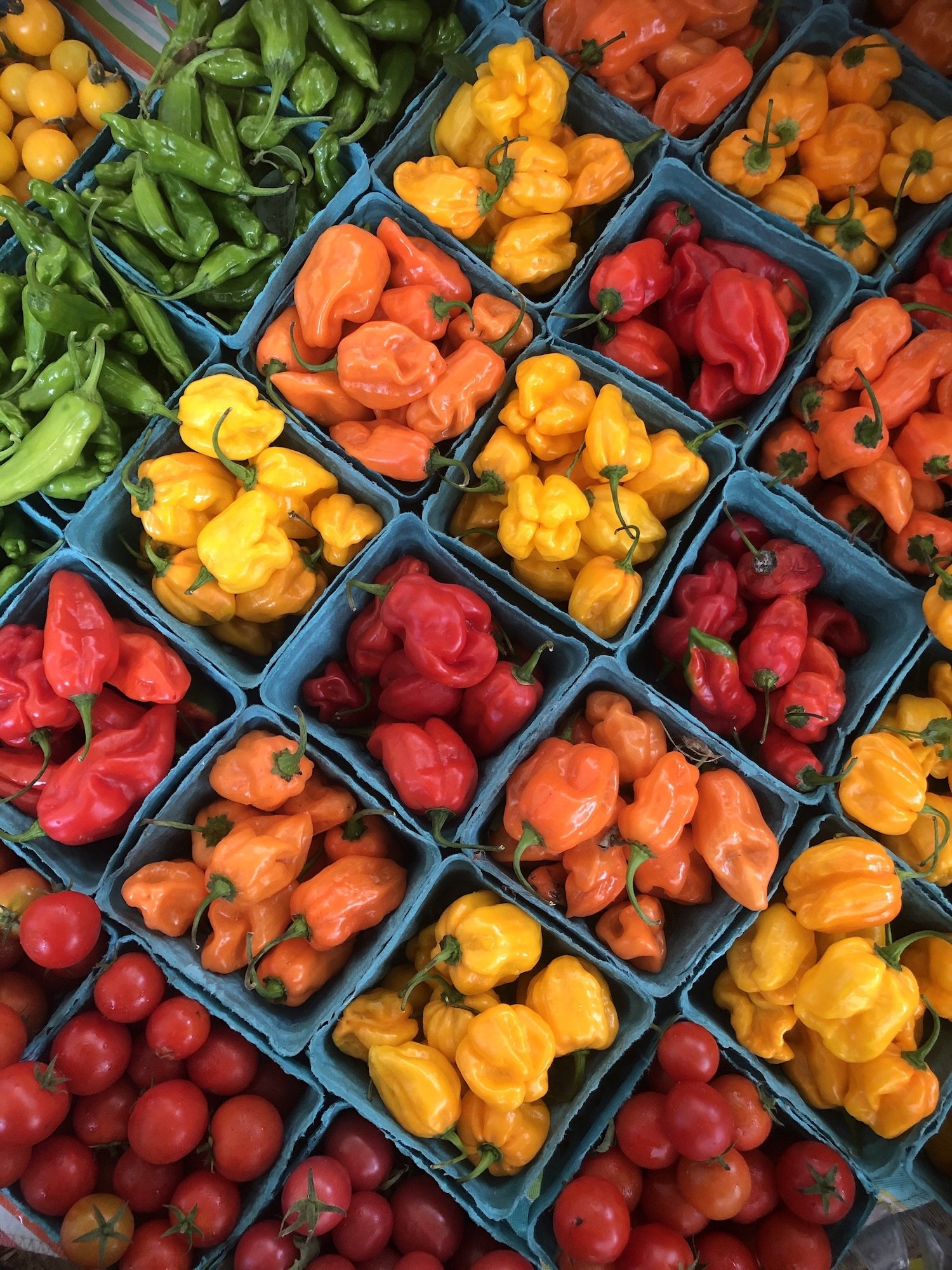
Although there are a very many tiny pepper in this world that will set your tongue on fire, the “Mini Peppers” in this group are sweet to mild and are meant to be eaten whole with ease. While shishitos and padrons tend to be more common at the farmers market, the range of super sweet, tropical, heatless habaneros are hot on the scene! Just toss these peppers into a frying pan with oil and serve with a sprinkle of salt, serve on a gorgeous multicolored platter, or eat them all to yourself alongside eggs for breakfast.

Sweet Peppers
There’s nothing like a crisp sweet pepper in the middle of summer, from bells to Italian peppers to pimentos and Jimmy Nardellos. Whether you enjoy them raw like an apple, chopped up fresh into a salad or slaw, cooked into a stir-fry or roasted and blended into a sauce, sweet peppers are where it’s at. Click to explore the full Pepper Index including six common sweet peppers.

